
A friend asked me a simple question recently: What color backpack did you want when you were a kid?
“I didn't have the luxury of wanting things. Tuh. When I was growing up, I was keenly aware of my family's financial situation.”
He asked if that had changed.
“Slowly,” I said. “But there's still some residual discomfort around allowing myself to want.”
I sat with that exchange for days afterward. Because here's what I’ve learned about scarcity: it doesn't dissolve the moment your bank account changes. It doesn't expire when you hit the income goal, or buy the house, or finally stop checking your account balance before you check the weather. Scarcity isn't just about money. It's about who you learned to be and what you came to believe in the absence of it.
This reminds me of something that happened when I was in the fifth grade. The movie School Daze had just come out, and everybody at school was getting biker shorts for field day. I wanted them desperately, but I didn't ask my parents because I didn't want to stretch an already tight financial situation for something that wasn’t a need.
My dad and I were out on a walk and he noticed that I was a little quiet and asked me what was up. I reluctantly told him that everybody was getting black shorts for field day, but that I didn’t want to ask for them. I shrugged it off playing down my want so as not to make him feel bad about not being able to get them for me. So imagine my surprise, appreciation and disappointment when he handed me a pair of black shorts the night before field day. Regular black shorts. Not the biker shorts I actually wanted but didn’t ask for because it was hard enough let myself want out loud, let alone name what I wanted clearly enough for someone to give it to me.
While I deeply appreciated his desire to make me happy, I was disappointed in myself for both putting him in that position. Not that I didn't get the biker shorts. But the discomfort I felt in response to having mentioned it and what I perceived as the hardship it caused.
The lesson I learned then, the belief cemented in that moment was that wanting more for yourself means someone else, someone you love, will have to sacrifice. And from that point forward, I began collecting evidence that that belief was truth. And as a result, I spent thirty plus years downplaying, quieting, and denying what I want because of that one belief formed when I was 11 years old. It didn't matter how much my financial reality changed. Our beliefs don’t update automatically just because our circumstances do–that’s something we have to do manually, intentionally.
I think this is why successful people, particularly those who grew up in scarcity, have a hard time answering the question, What do you want? and why they continue white-knuckling their way through a life they don’t want because there’s a negative association with wanting something you don’t need.
You can build the career, hit the number, buy the house and still flinch internally at the idea of wanting something for no reason other than you want it because it bumps up against a belief you hold as truth that wanting is dangerous, irresponsible, or for other people.
I see this constantly in the women I work with. They are, by any external measure, doing extraordinarily well. They can talk fluently about quarterly goals, five-year plans, legacy, the next promotion and minutes into a conversation with me go completely silent when I ask what they actually want for themselves. Not what they're building. Not what they're achieving. What they want. The silence isn't because they don't have an answer. It's because some part of them never got permission to have one let alone clearly verbalize one.
I don't think this gets fixed by simply deciding to want more, the way you might decide to eat more vegetables. The belief is cemented, reinforced by decades of: Wanting things is irresponsible. Wanting things will create discomfort. Wanting things will put the people you love and the stability you’ve worked hard for at risk. Wanting things is for people who have overflow — for other people, not you. Wanting things for myself is an unnecessary indulgence–better to put that towards my children or work or retirement because then I can do/have what I want.
Those sentiments don't disappear because you've achieved and earned enough to disprove them on paper. They live somewhere underneath the achievements, mostly undisturbed, quietly running the show.
What I've found instead is that it takes a kind of deliberate practice, what I call auditing your beliefs. Much like doing a deep clean or the stripping a house down to the studs when renovating a house. You have to first examine the belief and explore the possibility that an alternative one might exist. (These two, examine and explore, are a part of my Five E’s of Evolving.) It requires that we ask the deeper questions, the ones that consider a possibility beyond the belief. If it didn't make me greedy. If it didn't cost me anything I love. If it didn't put anyone at risk — what would I allow myself to want?
And then, the harder part: saying it out loud. Not because saying it makes it happen, but because saying it is the beginning of acknowledging and normalizing want as okay. It’s saying to yourself, I hear you.
I said out loud, once, that I wanted to move abroad. I had no plan for how. I just let myself say the want before I'd earned the right to have it figured out. And once I'd said it a few times, I felt more comfortable with the idea enough to tell a few people, not because I had a strategy, but because saying it out loud made it real enough to act on. One of those conversations led to work in London. That work led to a three-year project that ended up financially carrying my move and life in Lisbon.
I don't think that's magic. I think it's more like: the desires you actually have are a part of you, and to deny them is to deny a part of yourself and the life you’re meant to have. Your deepest wants aren’t frivolous, they are your roadmap. Not the five-year plan you made from scarcity. Not the goals you set because they sounded responsible. The things you want and have talked yourself out of — those are pointing somewhere. Squashing them, watering them down, refusing to be specific about them doesn't make you more responsible. It makes you feel adrift because you aren’t checking the map you already have.
So I'll ask you what I keep asking myself: what do you want? Not what you're supposed to want. Not what would look reasonable if you said it out loud at dinner. The actual thing — the one that still feels a little uncomfortable to name.
Scarcity taught us that wanting itself was the risk. Success doesn't automatically unteach that. Only we can do that.
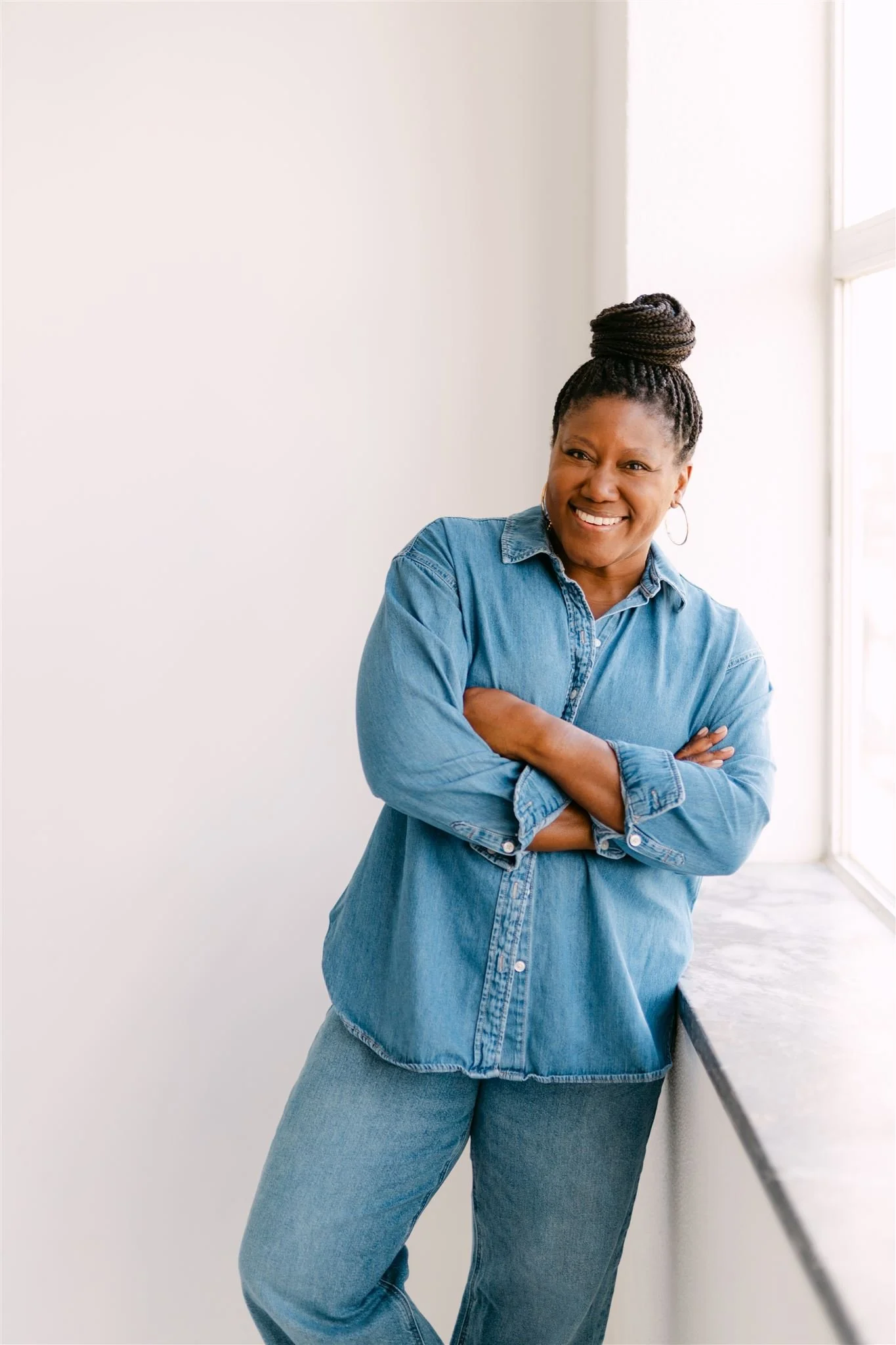
Hi, I’m Aisha
I work privately with women who've spent their careers being the first, the only, and the underdog, and while they've had great success, it's not been without sacrifice.
They've achieved everything they set out to. They are ambitious, driven, accomplished–and yet, something feels off, and they're not quite sure what to make of that.
If any of that resonates and you'd like to talk through where you are and what you're navigating, I'd love to connect.